


Companies verify share ownership through structured recordkeeping systems. These systems keep track of who owns issued shares at all times.
Share ownership verification is a structured process. It ensures the accurate identification of investors. For paying dividends and holding shareholder votes, it’s vital to check things carefully. The procedure includes transfer agents, brokerage firms, and centralized depositories.
Key Takeaways
- The shareholder registry is the formal record of who owns a business. It gets new information every time shares are sold or relocated.
- Many public companies engage SEC-registered transfer agents to help keep track of documents. This also keeps too many shares from being sold.
- Part of the verification process is checking certifications, signatures, and electronic acceptances.
- Most current shares are held electronically as book entries. Investors don’t have to rely on physical certifications.
Breaking Down Share Ownership Records
There are two ways to own shares: as a registered owner or as a beneficial owner.
- Registered shareholders are people whose names are on the company’s shareholder register. This registration is kept up to date by a transfer agent.
- Beneficial shareholders own shares through brokerage accounts or banks. This means they don’t own the shares directly. In this case, the broker is listed as the registered holder. The investor retains beneficial rights.
Companies verify ownership by relying on official records maintained by transfer agents. Centralized securities depositories also hold them. These systems ensure that ownership information is current and accurate.
What Transfer Agents Do
A transfer agent keeps track of shareholder information. They also process ownership transfers and manage related transactions. In the US, companies use firms like Legacy Stock Transfer to perform these functions.
It’s the job of transfer agents to:
- Keep up with the official list of shareholders
- Keep track of share transfers
- Issue and revoke share certificates, if necessary
- Handle dividend payments
- Handle contacts with shareholders
The transfer agent checks the name and quantity of shares during verification. They will also look at the registry’s record of past transactions.
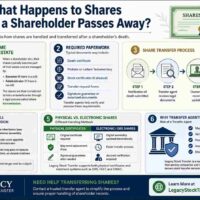
Verifying Share Ownership: A Transfer Agent’s Process
To check who owns shares, you need to do a few things.
- Identity Verification
The shareholder must supply information that will help find them. For instance, the shareholder needs to give their name, address, and account number.
- Registry Review
The transfer agent checks the official shareholder registry. They’ll confirm that the individual is the listed registered owner.
- Checking a Transaction
The agent looks at past transfers, issuances, or corporate actions that affect shares.
- Looking over Documents
Agents check over documents that support the transaction. For example, they look at stock certificates or transfer papers.
- Official Confirmation
Once the agent has checked, they issue formal confirmation of ownership. They will also make changes to the registration if they need to.
This organized approach makes sure that ownership records are correct. It also ensures these are allowed in court.
Why It’s Important to Verify
Companies and investors are both safe when verification is done correctly. It ensures that:
- Dividends are paid to the correct recipients
- Voting rights are properly allocated
- Corporate governance standards are upheld
- Fraud and unauthorized transfers are minimized
Maintaining reliable ownership records is a component of securities administration and investor protection.
The Role of Central Securities Depositories
For shares held in brokerage accounts, share ownership verification involves a central securities depository. Most publicly traded securities in the country are in electronic form via DTC. It’s a subsidiary of the Depository Trust & Clearing Corporation.
The depository holds securities in “street name.” This means the broker is listed as the registered owner. The investor is listed as the beneficial owner.
When a company needs to verify beneficial ownership, it works through broker-dealer records. It also goes through depository participant reports and beneficial owner lists. These are provided under regulatory requirements. This tiered method makes sure that electronic trading is open and efficient.
Frequently Asked Questions
-
What is the difference between beneficial and registered ownership?
Registered ownership means the shareholder’s name appears on the company’s register. Beneficial ownership means shares are held through a broker. The broker is listed as the registered holder.
-
Who’s in charge of keeping track of a company’s shareholders?
A transfer agent keeps the official list of shareholders. They also handle transfers of ownership.
-
How are shares verified if held in a brokerage account?
Broker records and central depositories are used to check shares. These institutions keep track of beneficial ownership electronically.
-
What papers do you need to prove that you own shares?
The required documents include account numbers, identification, and stock certificates (if applicable). When necessary, legal permission is needed.
-
Why is it vital to check who owns shares?
It ensures dividends are paid correctly and voting rights are legal. It also prohibits people from making transfers without permission.