


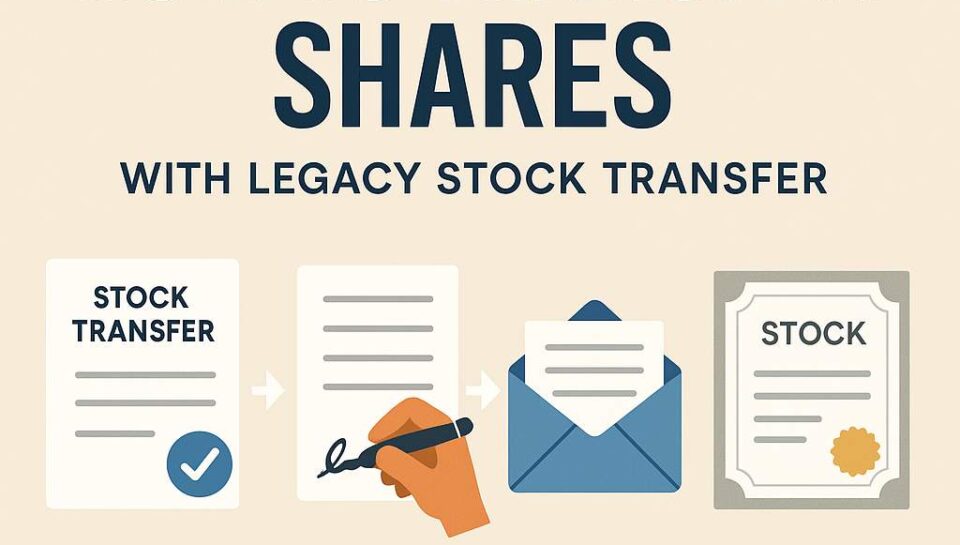
Transferring shares is a common occurrence in both private and public companies. Transfers happen due to internal restructuring, succession planning, or changes in investment.
Transfer proceedings for private companies are often more restrictive and formal. This is because of regulatory policies and internal agreements. It’s important to understand this process to ensure a smooth and compliant transfer.
Here’s a step-by-step guide on how to transfer shares with Legacy Stock Transfer.
Step 1: Review the Shareholder Agreement and Articles of Association
How do I transfer shares? The answer lies in the Shareholder’s Agreement and Articles of Association. It’s why you should start by reading and examining these documents.
The Shareholders’ Agreement and Articles of Association usually outline the following:
- Whether it allows stock transfers
- Restrictions or preconditions (e.g., approval from other shareholders)
- Pre-emption rights (offering shares to current shareholders first)
- Required documents or forms
Businesses without a formal Shareholders’ Agreement can use the Articles of Association. Company laws are also considered when transferring shares.
Step 2: Secure Consent or Approval
Many private companies need approval before stock transfers can happen. Approval could come from either the Board of Directors or other existing shareholders. Getting consent helps ensure control over the ownership structure. It also protects the company from unwanted stakeholders.
You can get consent by doing the following:
- Submit a formal request to shareholders or the board.
- Include information about the proposed transfer and the terms
- Wait for written approval as required by governing documents
Stock transfers can become invalid if you don’t secure consent.
Step 3: Prepare the Share Transfer Agreement
The parties involved in the transaction need a Share Transfer Agreement. It is usually drafted after obtaining approval. This legal contract is critical as it outlines the transfer terms, including:
- Name and details of the seller (transferor) and buyer (transferee)
- Number and class of stock transfers
- Buying price
- Transfer date
- Relevant warranties or representations
The Share Transfer Agreement is a legal document binding the two parties.
Step 4: Complete the Stock Transfer Form
The transferor or seller must complete a Stock Transfer Form. This form will include details, like:
- Company name
- Class and number of shares
- Consideration paid (price)
- Names and addresses of both parties
- Signatures of the seller (and sometimes the buyer)
Some states need the transferee or buyer to sign the form, too. This is to acknowledge acceptance of the shares.
Step 5: Pay Stamp Duty
If applicable, the buyer will pay a stamp duty upon transfer of shares. The cost is often calculated as a percentage of the sale price.
Compliance requires the buyer to submit the stock transfer form to the tax authority. They have to pay the applicable duty. They should also get a stamped or electronically certified form
Step 6: Board Resolution and Register Update
The Board of Directors will meet once the buyer has made the tax payments. They should also have all the necessary forms. The meeting is to get official approval of the share transfer. It’s done through a board resolution that includes a confirmation of the transfer. The board will approve the transferee as a new shareholder. They will also allow the updating of company records.
The company will update the Register of Members after approval of the share transfer. The register will reflect the new ownership. The transferee will receive a new share certificate. It will also cancel the existing certificate of the transferor.
Step 7: Notify Relevant Parties
The last step is for the company to notify the relevant parties. Files are always updated with the latest shareholder information. Changes in the statutory registers are also recorded.
It’s important to follow the filing requirements. Failure to do so could result in penalties. There might also be issues with future stock transfers.
In Conclusion
There are several steps to follow when transferring shares in a private company. The process demands careful attention to legal documents and tax regulations. You should also watch out for internal governance. Every stage in the process is crucial. It ensures the transfer is valid.
Partner with Experience
The right stock transfer company impacts your wealth-building journey. Legacy Stock Transfer is proud to be the trusted choice of thousands of investors. Our company has been in business for over 30 years. We bring a lot of experience and passion to the job. It’s one of the reasons why we’re recognized as the premier stock transfer company in the U.S. Contact us here. You can also talk to us at 972-612-4120.