
Investing in the stock market is exciting and challenging. It’s a dynamic arena that’s always changing. Many companies do this by changing their share structures.
Adjusting share structures can impact how investors view a company. It also impacts how their stocks perform. Among the most discussed share adjustments are stock splits vs reverse splits. Both alter the number of shares outstanding, but they do so in opposite directions.
The effects also have different implications for shareholders. It’s why they must understand the various stock splits. It’s critical in making informed investment decisions.
Defining Stock Splits
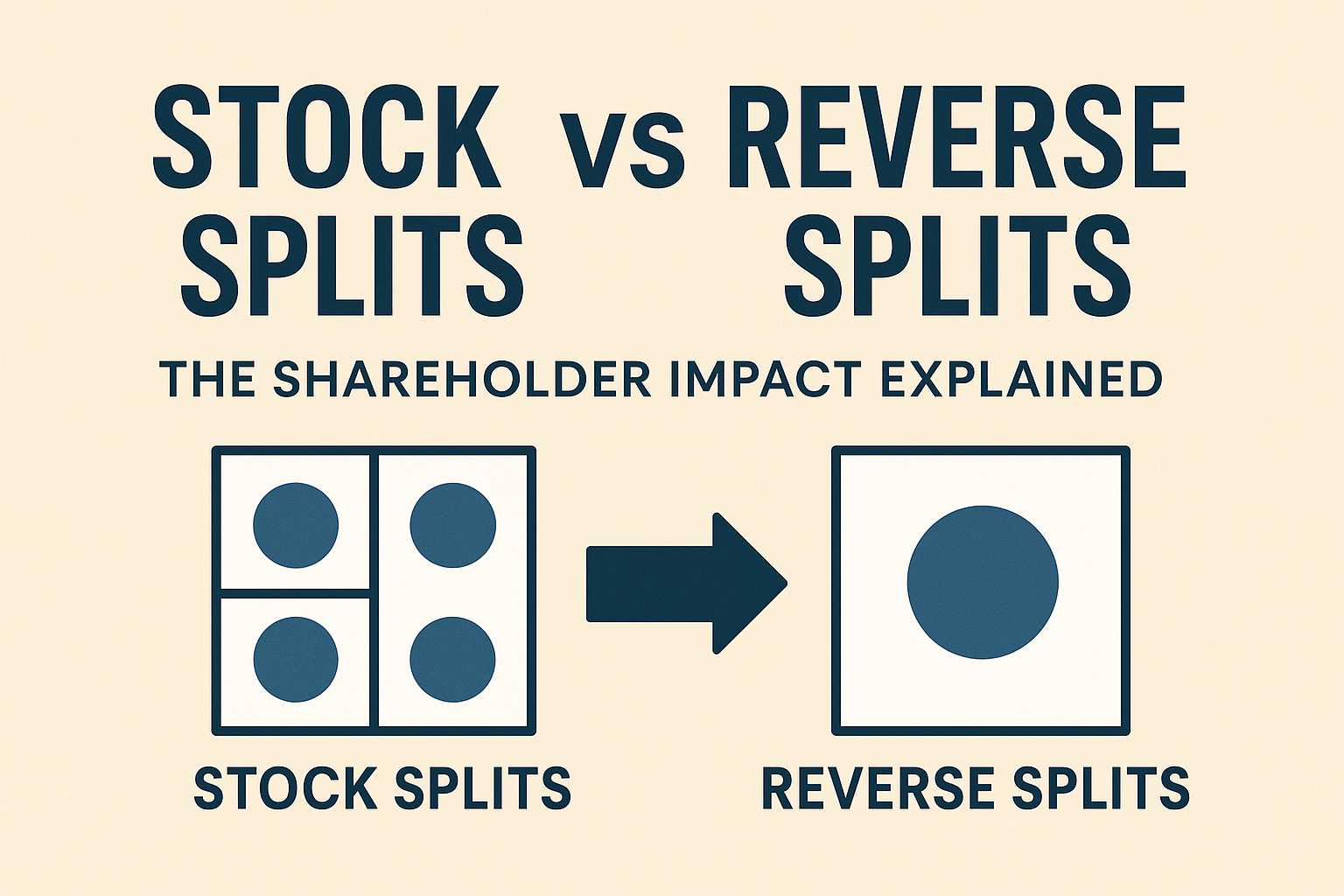
A company increases the number of its outstanding shares with a stock split. It issues more shares to existing shareholders. Companies use a specific ratio for a stock split. For example, they’ll do a 2-for-1 ratio. The shareholder will receive two shares for each share they bought.
For instance, you own 200 shares of a company trading at $100 each. The company decides on a 2-for-1 ratio split. You will double your holdings to 400 shares. But the company will divide the share price by two. The total value of your investment remains the same at $20,000.
Defining a Reverse Stock Split
A reverse stock split is the opposite of a stock split. The company lessens the number of its outstanding shares and increases the price. Like stock splits, it’s also done in ratios. For example, companies will opt for a 1 for 5 or 1 for 10 ratio. A shareholder will get an extra share for every five or ten shares they have.
Let’s say you own 1,000 shares of a company. These shares are trading at $1 each. The company opts for a 1-for-10 reverse split. You now own 100 shares priced at $10 each. The total value of your investment remains the same $1,000.
Why Companies Engage in Stock Splits
Companies often do stock splits when there’s a large increase in their share prices. Higher prices can discourage investors from buying shares. Bringing the price down through a stock split makes them more accessible.
A reverse stock split is different. Companies opt for reverse splits when share prices are too low. And they’re in danger of getting delisted. They also do reverse splits when they’re trying to restructure or reduce volatility. It’s also done to improve their appearance for institutional investors.
How Do Stock Splits Affect Shareholders?
Stock splits and reverse splits are two sides of the same coin. The effects of share adjustments vary, though. Let’s take a look.
Value of Holdings Stay Constant
The investment value in stock splits and reverse splits remains constant. It doesn’t matter if the shareholder receives more shares at a lower price. It also doesn’t mean anything if one gets fewer shares but at a higher value. The stock market value stays the same.
Investor Perception and Market Confidence
Most investors look at stock splits in a positive light. It’s because stock splits often happen after a company performs well. This attracts more investors. It also increases the demand and price.
It’s the opposite with reverse splits. Many investors view them as a desperate measure to boost the share price. They’re especially concerned if the company has financial problems. There are cases where share prices decline after reverse splits.
Liquidity and Accessibility
Stock splits increase the number of shares available, resulting in higher liquidity. This makes trading easier and more cost-effective for investors.
The number of shares lessens during reverse splits. This also brings liquidity down, making it harder to buy or sell stocks at a good price.
Psychological Impact
Psychology plays a significant role in investing. Lower-priced shares after a stock split appear more affordable and attractive. The positive impression remains even though the company’s market cap remains the same. A higher share price after a reverse split also gives the illusion of stability.
Final Thoughts
Stock splits and reverse stock splits share many similarities. These mechanisms adjust a company’s share price and count. It doesn’t change the share’s general value, though. Their implications for shareholders differ. The former often signals growth and optimism. The latter hints at underlying challenges.
Guiding You Through Your Investment Journey
Investing is easier when you have the expertise of Legacy Stock Transfer on your side. Our company is here to support you every step of the way. We provide expert shareholder services and seamless share transfers. Our decades of trusted experience make us the ideal proxy in annual meetings. You can also trust us with shareholder forms and communication. Reach out today and call 972-612-4120. We’ll show you why thousands of shareholders choose Legacy Stock Transfer!